
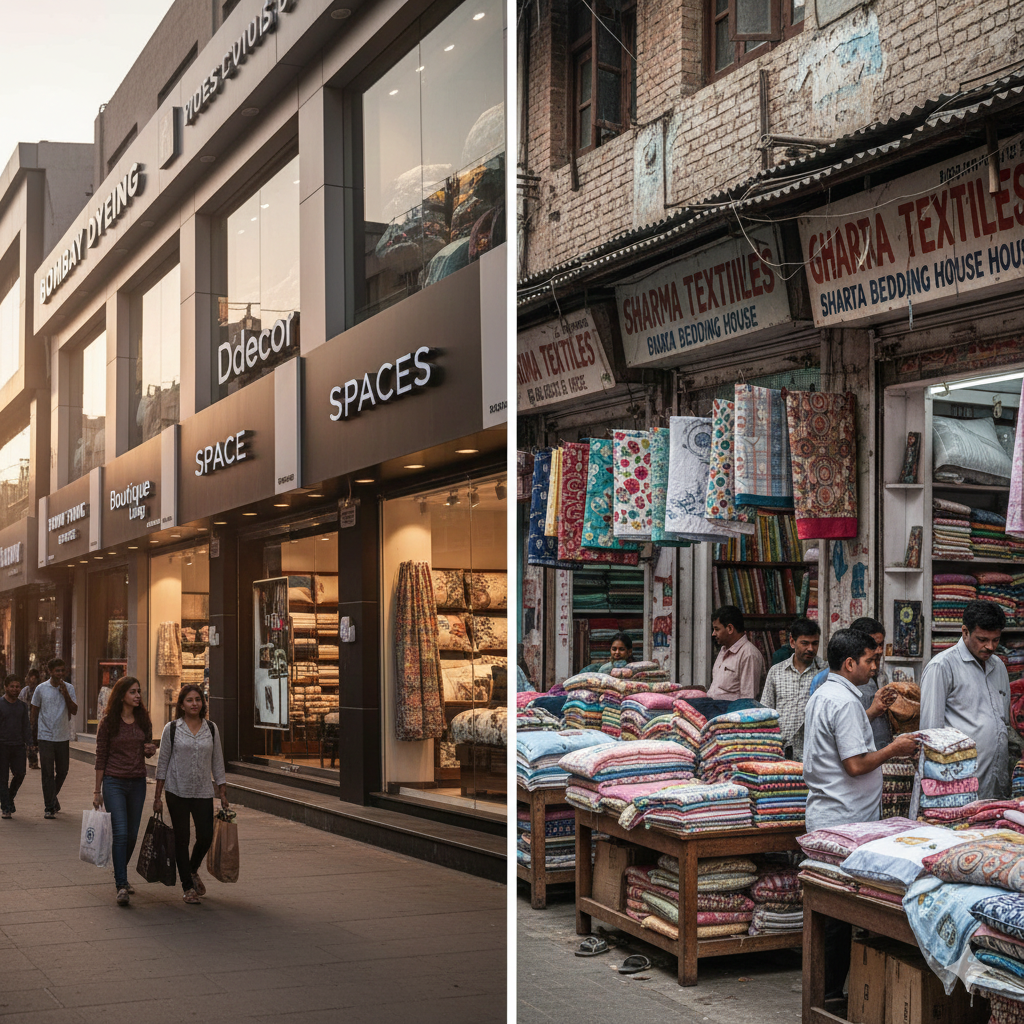
The Glass Ceiling in Home Textiles: Why National Brands Plateau and How to Break Through
Strategy by The Genius Advisor
India is the backbone of the global textile industry. We clothe the world’s beds and baths, yet when we look at our domestic market, the story changes. Most national brands reach a certain turnover—let’s call it the "Comfort Zone Plateau"—and then they just stop growing. The momentum fizzles out.
Is there a jinx on this category? No. Is there a lack of demand? Absolutely not. The problem is a mix of internal structural baggage and external market friction. In short, many brands are suffering from a "Manufacturing Mindset" in a "Consumer-First" world. It's time for a reality check.
Internal Bottlenecks: The "Ghar ki Murgi" Syndrome
Most of India’s top brands are extensions of massive export houses. While their balance sheets look great, their brand-building DNA is often missing. Here is why the internal engine is stalling:
1. The Capacity Trap (Production over Passion)
When you own a factory with 500 looms, your daily nightmare is idle capacity. This forces the brand to become a dumping ground for whatever the factory produces. Instead of asking "What does the consumer want?", the management asks "What can our machines make today?" This leads to a massive inventory of products that no one asked for, sold via heavy discounting. It's a classic case of paisa vasool logic failing the brand vision.
2. Short-termism in Brand Building
In the export business, you get an order today and ship it tomorrow. Brand building, however, is a slow burn. Most Indian promoters lose patience within 18 months if they don't see "Export-style" volumes. They treat branding as an expense rather than an investment, leading to half-baked campaigns that lack the dum to create long-term equity.
3. The Innovation and Aspiration Gap
Profitability is thin because we are playing the 'Price War' game. We haven't given the consumer a reason to pay a premium. If your bedsheet is just "soft," you are a commodity. If your bedsheet is "stress-reducing and temperature-regulating," you are an aspiration. Without genuine R&D, brands are just fighting over the same 10% margin, leading to a race to the bottom.
4. Product-Led vs. Solution-Led Communication
Check any Indian textile brand’s Instagram. It’s a catalog of floral prints. We are obsessed with Look and Feel, but we ignore Utility. We don't sell "better sleep" or "a hygienic home"; we sell "600 TC Cotton." This technical jargon doesn't solve a consumer's problem—it just adds to the noise.
5. Top-Heavy Decision Making
Many of these companies are family-run giants where every small decision goes to the 'Bade Bhaiyya' or the MD. In a world where digital trends change weekly, this Lamba Process kills agility. By the time a decision is made, the market has moved on, leaving the brand looking dated and "uncle-ish."
External Hurdles: The Wild West of Indian Retail
Even if a brand fixes its internal culture, the Indian market is a tough nut to crack. The external environment is cluttered, unorganized, and price-sensitive.
1. The "Nobody Owns the Category" Problem
Think of smartphones—you think of Apple or Samsung. Think of Home Textiles—and... silence. No brand has done the heavy lifting of "Category Building." No one is educating the Indian middle class on why they should upgrade their home linens every year. We are all fighting for a piece of the existing pie instead of making the pie bigger.
2. Design is Not a Differentiator
Indian consumers are used to seeing beautiful designs at the local patri or unorganized wholesale markets. If your brand communication is only about "Sunder Designs," you are competing with the local shopkeeper who has no overheads and lower prices. Yahan design se kaam nahi chalega; you need a benefit-led hook.
3. The Discretionary Buying Curse
For most Indians, buying a new set of towels or curtains is a "Diwali-only" or "Wedding-only" event. It sits low on the priority list compared to electronics or fashion. Brands haven't successfully created "Micro-occasions" or "Need-based triggers" to move this category into a high-frequency purchase cycle.
4. The Shadow of the Unbranded Hub
India is a manufacturing hub. This means high-quality "surplus" or unbranded merchandise is available in every major city (like Panipat or Erode) at 40% of the brand’s price. Without a massive "Trust Factor" or "Tech Advantage," the average consumer will always choose the unbranded alternative. Why pay for a logo that doesn't offer extra value?
5. Zero Entry Barriers
Today, anyone with an Instagram account and a sourcing contact can launch a "Home Brand." This creates a fragmented market where national brands are being nibbled at by thousands of small D2C players who are more agile and better at storytelling.
The Final Verdict: Stop Being a Factory, Start Being a Force
The plateau isn't a destiny; it's a choice. To break the glass ceiling, you must stop thinking like a vendor to the world and start thinking like a partner to the Indian homemaker. If you keep doing vahi-purana-business, you will get the same stagnant results.
Scaling requires a fundamental shift in your Go-To-Market (GTM) strategy. You need to stop selling "Kapda" and start selling "Comfort, Health, and Status." If your brand feels stuck, it’s because your strategy is designed for 2015, not 2026.
Ready to shatter the plateau?
Don't let your brand become a footnote in the history of Indian manufacturing. At The Genius Advisor, we specialize in identifying these specific "Internal vs. External" leaks and plugging them with surgical precision. Enough of the "Trial and Error" method—it’s time for expert intervention.
Let’s build a legacy, not just a ledger. Connect with us for a Strategic Advisory session today.